Doing The Right Things: The Death Of The Mega-Project And The Rise Of Sustainable Viability
Friday, 08 May 2026By Christopher Gleadle

The investment landscape of 2026 has reached a definitive crossroads, and it is a fascinating moment to observe how capital is being re-evaluated. For a long time, the market's collective wisdom has prioritised efficiency: essentially the art of doing the old things slightly better. It is a comfortable, well-trodden path, but one wonders if we are reaching the limits of that particular map.
In a world increasingly defined by flux and ambiguity, efficiency can occasionally become a trap; an exercise in polishing a vulnerability. As we look toward securing long-term returns and achieving genuine impact, there is a compelling case for a strategic pivot toward effectiveness. This isn’t just about optimisation; it is about architecting entirely new systems rather than trying to fix the wrong ones.
Beyond the Polished Vulnerability

The legacy models we’ve relied upon assume a world of stable supply chains and predictable geopolitics. Much of what we call efficiency-focused technology is focused on incremental gains, such as reducing transmission losses or making bigger wind turbines. From a strategic perspective, however, this can represent a liability. Improving an inflexible, centralised AC grid often results in diminishing returns and leaves an investor exposed to global shocks and fragile dependencies.
Effectiveness, by contrast, invites us to ignore the constraints of the legacy grid. It asks what system physics and current social realities actually demand. By shifting capital into the right things, we can move from a state of interdependent vulnerability to one of autonomous resilience.
The Modular Revolution
There is a certain Alpha to be found in aligning with physical realities. We are witnessing a vital shift toward direct current (DC) integration. Consider that most high-value modern loads from AI data centres to electric vehicles, are native DC. While traditional efficiency tries to fix conversion losses within an AC framework, effectiveness bypasses them entirely by building DC-native microgrids and industrial clusters.
For the long-term investor, this modular revolution offers several distinct advantages:
- Rapid Deployment: By utilising standardised, factory-built modular units, projects can often bypass the permitting queues and long-range dependencies that plague traditional mega-projects.
- Reduced Capital Expenditure: Shifting from top-down mega-projects to bottom-up modular clusters allows for scale through repetition rather than singular, high-risk infrastructure bets.
- Market Alignment: Hardwiring industry directly to energy hubs creates defensible, economically insurable zones that are better insulated from regional conflicts.
Reframing Sustainability
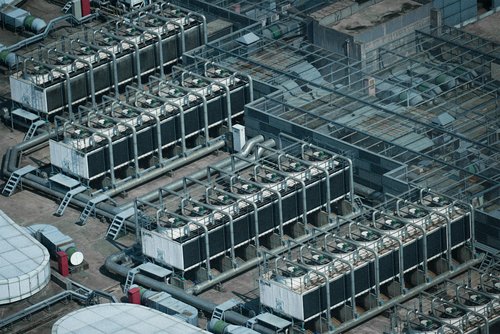
It is perhaps time to look at ESG not as a cost burden, but as the cornerstone of economic strength of Sustainable Viability. If it’s not sustainable and viable it’s not sustainable.
The Energy-Water Hub is a prime example of this transition to effectiveness. An effective architecture recognises that energy, water, and industry are inseparable.
Instead of funding separate power plants and desalination facilities, capital can be deployed into integrated resource hubs. In these natural order clusters, allow for simple to achieve effective symbiotic value gains as feedback loops remove waste through use in other processes driving the efficiency gains as a by-product. This sustainably viable multi-revenue stream approach selling electricity, potable water, and industrial capacity from a single site provides a much more robust and fairer economic architecture.
The Sovereignty Play
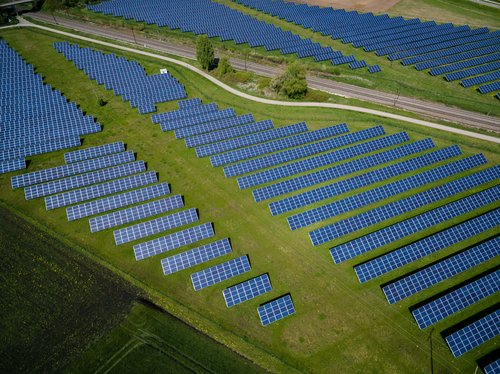
Perhaps the most compelling argument for this effectiveness-first approach is energy sovereignty. Efficiency might save pennies, but effectiveness has the potential to re-architect the entire cost base of a national economy. By investing in technologies that close the electron gap, we can provide nations with cheap, abundant power locally. This eliminates the need to import volatile energy across unstable borders. It effectively swaps complex, millions-of-parts supply chains for modular, physics-based approaches. This isn’t merely a green play; it is a security play.
As we look toward 2027and beyond, it seems those who continue to chase efficiency may merely be optimising for the past. The path to robust, secure returns likely lies in systemic intervention: exploring different boundaries and values to find the architecture that our current era demands. By prioritising effectiveness, we move away from mega-project risks toward resilient, decentralised growth. This is the foundation of a new industrial renewal; one that is not only faster and cleaner but fundamentally more secure.
Ultimately, the future of finance isn’t just about doing things better; it’s about doing the right things.
Christopher Gleadle, CEO SV-Electra
May 2026