Re-Engineering Investment For A Volatile 2026 And Beyond
Tuesday, 31 March 2026By Christopher Gleadle

As we navigate the opening quarter of 2026, the traditional investment playbook has been rendered obsolete by a cold, hard economic reality. While the legacy market design was built for a world of predictable fossil-fuel stability, the current geopolitical landscape marked by Middle Eastern volatility and energy market tremors is defined by ambiguity and flux. For the modern investor, the pivot has moved decisively from the ‘why’ of the energy transition to the ‘how’ of its execution.
FDI can no longer merely search for cost effective labour or market entry. It has to become a strategic pursuit of a ‘bug-free operating system’ of the next industrial revolution. I believe three high-value pursuits will reshape the global flow of capital.
- The Electron Gap: Power as the Primary Competitive Advantage
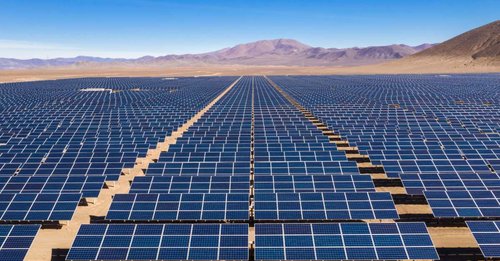
The emergence of a widening electron gap matters since competitive advantage of the next decade will no longer belong to those with the largest populations, but to those who can secure cheap, abundant, and ultra-clean electricity.
We will see a huge divergence in industrial survival based on power costs. In 2025, clean energy sectors drove over 90% of China’s total investment. The results are stark: Chinese data centres - the engines of the AI revolution - currently pay 40-60% less for electricity than their American counterparts. Meanwhile, Europe’s industrial electricity costs remain roughly double those of China.
For the investor strategist, this disparity is the ultimate arbiter of innovation. Capital will flee jurisdictions with inflexible, legacy grids and flow toward physics-based, modular approaches that offer energy resilience. If a nation cannot bridge this electron gap, it risks becoming a sunken asset in the global economy, as the cost of power dictates the very future of technological development.
2. The Water-Power Nexus: Reshaping Global Supply Chains
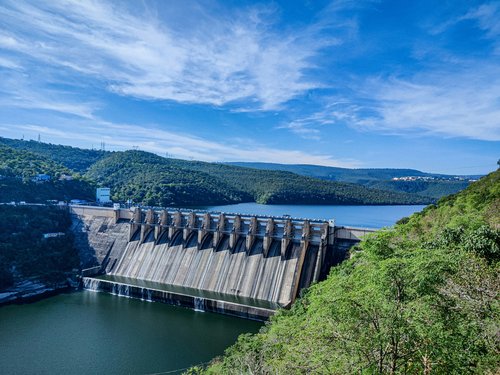
A factor often missed by conventional financial analysis focussed on energy is water. Energy and water are inextricably linked. One without the other doesn’t work. The integration of power and water is the critical ‘Missing Link’ for industrial stability.
Traditionally, desalination has been viewed as an energy drain. However, the next wave of investment will need to target integrated assets: single facilities that function as power plants while producing abundant, cheap water as a primary byproduct. This Water-Power Nexus will create a new geographic logic for investment. When these two vital resources are combined and abundant, industries and communities will naturally cluster around them, fundamentally reshaping global supply chains.
Investors will be seen moving away from isolated linear, incremental upgrades to those that where efficiency and effectiveness have to be seen together to underpin security resilience and returns. This matters since investors gaze will alight upon regions that understand the interdependence of vital industries. These are the sectors such as energy, water, food, and digital networks; without which daily life and social stability would break down. In a three-dimensional economy, a failure in energy and water disrupts hospitals, banking, industry and food simultaneously. This suggests capital will need to prioritise infrastructure that treats energy-water connections as a source of strength rather than a point of fragility.
3. From Narrative ESG to Material Sphere Economy Risk
This marks the death of glossy appendix sustainability. For too long, investments have been guided by reassuring narratives and economic misbehaviour - a gap between green rhetoric and the lived reality - of rising costs and environmental degradation. Sustainability will be reframed through the lens of materiality and interdependencies.
This means institutional investors will need now focus on ESG factors that genuinely affect a firm’s economic performance and risk profile. Sustainable Viability. The data is clear: companies that perform well on material sustainability issues tend to outperform those that focus on immaterial addons.1 We are moving toward an accounting system of spherically influenced economic profit. This metric accounts for:
- The value of opportunity in reducing waste.
- The frictionless management of all forms of capital
- The unseen costs of foregone decisions.
Investors become increasingly wary of the ‘Carillion-style’ trap: companies with mature-looking sustainability reports that hide underpriced liabilities and poor governance. Today’s capital flows toward entities that treat an organisation as a set of interconnected cycles where waste streams become inputs. This shift from less harm to doing better is not just an ethical choice; it is a move toward sustainable viability that protects against systemic waste and hidden fragility.
The Outlook: The Resilience Mandate
As the 2026 landscape continues to shift, the task for global investors is behavioural as much as it is financial. Reforming the system requires aligning individual responsibilities and incentives with the regeneration of vital industries.
The Electra Mandate suggests that the most successful recipients will be those that move health, ecological integrity, and long-term resilience from the margins of reporting to the centre of economic decision-making. In this new era, short-termism is a terminal liability. The future belongs to the bug-free systems that can withstand the tremors of a world in transition.
Christopher Gleadle, CEO, SV-Electra, March 2026
1 The Five Essential Steps To Sustainable Viability, C Gleadle, 2018