Teach A Man To Fish : An interview with John Buton
Monday, 18 May 2026By Simon Mills
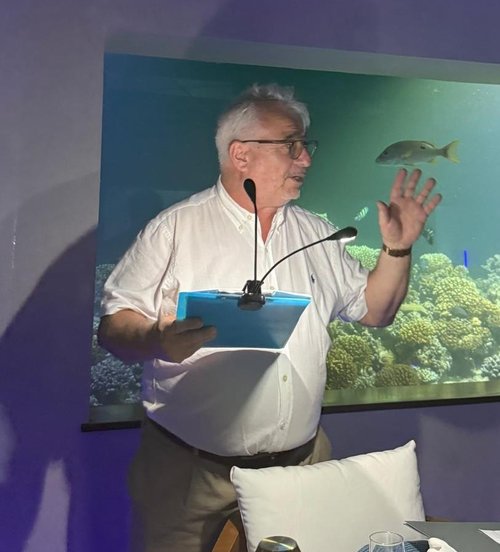
John Burton is a British entrepreneur, sustainability leader and philanthropist who has spent over four decades advancing responsible fisheries, coastal livelihoods and environmental conservation.
Over his career he has played a massively influential role in international fisheries governance, advising governments and contributing to science-based decision making at the Indian Ocean Tuna Commission.
Beyond business, he has driven systemic change through initiatives such as the International Pole & Line Foundation and the Community Catch standard, while also founding the Sustainable Fisheries and Communities Trust to build future leadership in fisheries policy and science. In the UK, he contributes to environmental resilience as Chair of Pollinating London Together, promoting biodiversity through evidence led urban conservation.
I was lucky enough to catch up with John as he passed through the City of London
SM: John, could you start by summarising your career and what has driven your work over the past four decades?
John:For more than forty years, my work has focused on the intersection of sustainable fisheries, coastal livelihoods and environmental conservation. What has consistently driven me is the belief that science-based fisheries management, fairness in markets and respect for coastal communities are not only morally right, but essential for long-term environmental and economic resilience. Throughout my career, I’ve tried to demonstrate that sustainability and commercial success can – and must – go hand in hand.
SM: Much of your work has been through business. How has World Wise Foods contributed to sustainability?
John: I founded World Wise Foods back in 2010 and from the outset, we were committed to sourcing tuna caught exclusively using one‑by‑one methods such as pole‑and‑line and handline – because this is the most selective and environmentally responsible fishing practices available. As the business has grown, we’ve demonstrated that responsible sourcing principles can be maintained at commercial scale. At a time when industrial fishing dominated global markets, we built supply chains centred on traceability, ecosystem protection and fair treatment of fishers, while still supplying leading retailers in the UK and internationally.
SM: Why is one‑by‑one fishing so important?
John: One‑by‑one fishing methods such as pole-and-line catch one fish at a time, using one hook and one line. They are widely regarded as the most responsible way to catch tuna from both an environmental and social perspective.
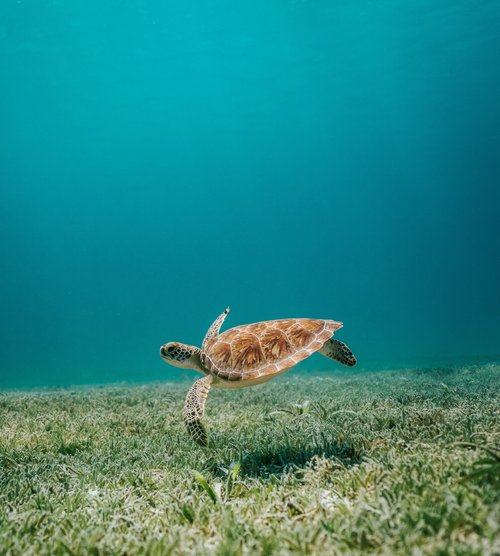
By contrast industrial fishing methods include purse seine (a huge net deployed to encircle an entire school of fish, which is then drawn closed at the bottom like a purse), and longline fishing which uses lines, which are in some cases more than 50 miles long, fitted with many baited hooks.
Both of these methods can be highly destructive as they are indiscriminate and can kill unintentional bycatch species such as seabirds, turtles, sharks, and dolphins. Not only does it harm these non-target and often vulnerable species, it impacts the broader ecosystem – and the capture of juvenile fish can impact the future population of the target species.
Unfortunately, purse seine fishing is responsible for two-thirds of the global tuna catch, whilst long-line fishing is around10% of the global tuna catch.
Catching by pole-and-line is highly selective, allowing tuna species to flourish while minimising bycatch and protecting biodiversity.
Pole-and-line fishing gear does not interact with seabeds, avoiding damage to marine habitats – and the fishing gear is not typically lost or abandoned, minimising ocean pollution and avoiding the risk of ‘ghost gear’ fishing. ‘Ghost gear’ fishing refers to the ongoing capture or entrapment of marine life by lost, abandoned or discarded fishing gear such as nets or traps, that keep ‘fishing’ after they have been left at sea.
Pole-and-line fisheries are very people-centric, providing employment and contributing to cultural identity as well as contributing to the local economies of coastal communities. These methods are not just better for oceans – they protect livelihoods of fishers and coastal communities, providing income alongside food security.
SM: You’ve also worked extensively on improving market access for small‑scale fishers. Why is this an issue?
John: Small‑scale and artisanal fisheries produce around 40% of the global catch and support hundreds of millions of livelihoods, yet they are structurally disadvantaged in global seafood markets. Certification systems and market standards are often costly and complex, effectively excluding the very fisheries that are operating most responsibly. My work has focused on correcting that imbalance — improving traceability, compliance and transparency while ensuring fishers receive fair value for their catch.
SM: This led to your involvement with the International Pole & Line Foundation. What was your role there?
John:I was a founding Trustee of the International Pole & Line Foundation in 2010 and chaired it for eight years. During that time, we worked with fisheries across more than 20 countries to strengthen governance, improve data collection, pilot electronic monitoring, support fisher education and enhance supply‑chain traceability. The aim was simple: protect fish stocks while safeguarding livelihoods and improving access to responsible markets.
SM: You’ve also played a significant role at the Indian Ocean Tuna Commission. What impact has that had?
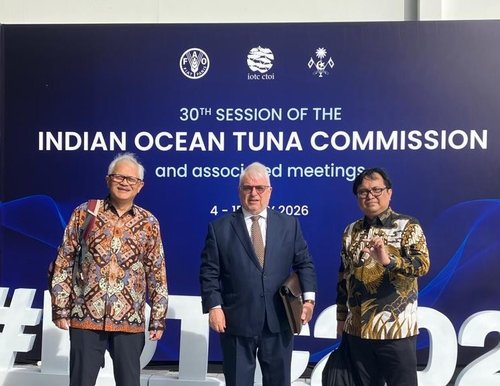
John: The Indian Ocean is critical to global tuna stocks, and effective management requires international cooperation. The Indian Ocean Tuna Commission (IOTC) is a Regional Fisheries Management Organisation (RFMO) – an intergovernmental organisation responsible for managing tuna stocks in the Indian Ocean. Because tuna are highly migratory, effective conservation depends on collective, international governance, making RFMOS critical to sustainable management.
The IOTC oversees fishing effort in the region, sets conservation and management measures such as catch limits, collects scientific data, assesses tuna stock health, and monitors compliance. I supported the Maldives in becoming full members of the IOTC and have advised multiple coastal States over many years. One of the most significant achievements was helping secure the first operational harvest control rule for skipjack tuna adopted by any tuna RFMO. This was a major step toward transparent, rules‑based, science‑led fisheries management that removes annual political interference.
SM: You’ve challenged existing certification systems like the MSC. Why?
John: While I was an early supporter of the Marine Stewardship Council, it became clear that the standard focused too narrowly on environmental criteria and failed to adequately address social, labour and human‑rights risks. It also unintentionally favoured large industrial fisheries – as I mentioned earlier due to cost and complexity. That led me to support reform efforts and later to fund the development of a new standard – Community Catch – designed specifically to enable small‑scale fisheries to access global markets on fair and realistic terms.
SM: Community Catch launched recently. What makes it different?
John: Community Catch was launched in 2025 after several years of development. It addresses the structural barriers that prevent small‑scale fisheries from accessing certification. Importantly, it goes beyond environmental sustainability to include social and community criteria. It’s now active across multiple countries and fisheries globally and has strong support from retailers and partners who recognise the need for a more equitable system.
SM: Philanthropy also plays a major role in your work. Can you tell us about that?
John: In 2020, I established the Sustainable Fisheries and Communities Trust (SFACT) to focus on long‑term capacity building rather than short‑term charity. The Trust supports fisheries science, governance reform and human rights, particularly in regions where communities are most dependent on oceans for livelihoods and food security. A key focus has been funding postgraduate education to help develop future leaders in fisheries governance.
SM: Have you seen tangible results from that approach?
John: Absolutely. Several Trust‑funded PhD scholars are now heads of national delegations at the IOTC, sitting at the table where conservation measures and fishing limits are negotiated. Their research is directly shaping policy and strengthening the voice of coastal States in international decision‑making. That kind of systemic impact is exactly what we set out to achieve.
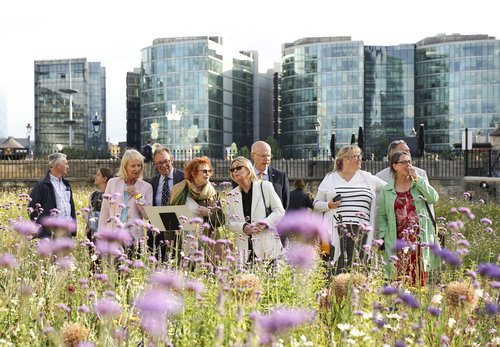
SM: Your work isn’t only international. How have you contributed within the UK?
John: As Chair of Pollinating London Together, I’ve been involved in strengthening urban biodiversity through evidence‑led environmental action. The programme has generated one of the UK’s most robust datasets on urban pollinators and demonstrated that well‑designed interventions can significantly increase species richness, even in dense city environments. It’s also had a strong educational and civic engagement dimension.
SM: What ties all these strands of your work together?
John: At its core, my work is about equity, evidence and long‑term thinking. Whether through business, policy, philanthropy or civic action, the goal has always been to protect ecosystems while improving human wellbeing. That means ensuring science drives decisions, coastal communities have a fair voice, and sustainability delivers tangible, lasting benefits — not just good intentions.
SM: Your work is frequently described as aligning with the UN Sustainable Development Goals. How consciously have the SDGs shaped your approach?
John: Very consciously. While my work began long before the Sustainable Development Goals were formally adopted, the SDGs provide a clear and internationally recognised framework that closely reflects what I’ve been trying to achieve throughout my career. In particular, SDG 14 — Life Below Water — and SDG 14.b, which focuses on securing access to marine resources and markets for small‑scale artisanal fishers, directly align with my work in fisheries governance, supply‑chain reform and market access. Likewise, SDG 15 — Life on Land — is reflected in my UK-based work on urban biodiversity through Pollinating London Together.
What the SDGs help to do is connect environmental protection with social equity and long‑term resilience. They reinforce the idea that sustainability isn’t just about protecting nature in isolation — it’s about improving livelihoods, strengthening communities and ensuring that environmental stewardship delivers real, measurable public benefit. In that sense, the SDGs don’t sit alongside my work; they are embedded within it.
SM: Finally, how do you reflect on the broader impact of your career?
John: I’ve been fortunate to work with governments, communities, science leaders and businesses around the world. Together, we’ve helped improve fisheries governance, protect livelihoods and strengthen environmental outcomes. If there’s a legacy I hope to leave, it’s showing that responsible, equitable management of natural resources is both possible and essential — and that it benefits everyone in the long run.