The Gigawatt Mirage: Re-Engineering The Green Transition For Autonomous Resilience
Tuesday, 21 July 2026By Christopher Gleadle

The global green transition is currently suffering from an obsession with ‘scale over integration’. In the polite, air-conditioned rooms of international policymaking and finance, sheer capacity has become the ultimate vanity metric. It’s the corporate equivalent of purchasing a massive SUV for a brief city commute: visually striking on an investment brochure but structurally inefficient for the reality of the journey. By treating headline gigawatt capacity as the primary key performance indicator, current regulatory frameworks elegantly subsidise the past while starving genuine innovation.
Under such misguided policy regimes, governments rely heavily on capacity payments, rewarding facilities simply for existing and promising potential, rather than delivering actual performance. The result is a fragile architectural design where market incentives aggressively favour passive availability over clean delivery, leaving national grids vulnerable to supply shocks and effectively funding our own eventual blackouts.
To correct this systemic misalignment, policy must see its way to transcend linear thinking. Linear models focus narrowly on the marginal efficiency of individual components, whereas true structural viability demands systems thinking applied to holistic effectiveness.
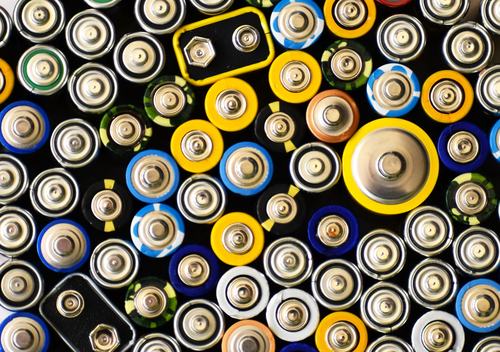
Consider the European Union’s recent tripartite agreement on energy storage, which pledges to deliver 30 to 35 gigawatts of new capacity by 2028, with underlying texts stretching to 45 gigawatts. While expanding the role of batteries is critical to capture surging, intermittent cheap solar and wind power, deploying storage in isolation treats the symptom rather than the disease. Grid delays, permitting bottlenecks, and severe supply chain liabilities persist. Joint Research Centre (JRC) data reveals that the EU possesses near-zero self-sufficiency in graphite and profoundly low self-sufficiency in critical minerals like lithium, cobalt, and nickel. Pursuing massive battery rollouts without resolving these raw-material dependencies and clogged connection queues simply locks economies into a different flavour of structural vulnerability.
True progress requires looking beyond isolated power lines and linking energy explicitly to water, global digitalisation, and green industrialisation. The missing link in this macro-economic equation is the water-power nexus. While traditional desalination systems have long been viewed as a punitive, high-cost energy drain, emerging systemic solutions, such as the SV-Electra architecture, fundamentally rewrite this dynamic. By treating concentrated brine waste not as an environmental liability but as a core input, this technology generates 24-hour, ultra-clean baseload power. This systemic feedback loop slashes up to 45% of the electricity costs traditionally attributed to desalination and effectively doubles power delivery, injecting predictable, continuous generation back into the regional industrial network alongside intermittent assets.
When wind, solar, batteries, and brine-to-energy baseload systems intersect within a coordinated ecosystem, they systemically dismantle the cost premiums and inefficiencies engineered by operationally problematic policy. Intermittent wind and solar provide abundant, low-cost electrons during peak generation windows. Short-term battery storage steps in to absorb intra-day shocks, capture negative-pricing energy, and provide tactical flexibility for peak demand. Crucially, the brine-waste-to-energy system provides the unyielding, 24-hour baseload foundation that traditional renewables lack, removing the requirement for legacy, fossil-backed capacity payments to maintain grid stability. Instead of an either/or ideological battle between baseload security, green generation and water, an integrated ‘and’ philosophy allows these technologies to complement one another, maximising holistic system effectiveness over isolated component efficiency.
For global policymakers, the ultimate prize of this systemic shift is the creation of Autonomous Resilience (Gleadle, C 2026). Historically, governments competed for foreign investment by aggressively cutting the marginal costs of labour, land, and utilities, operating under the naive assumption that core resource systems would remain indefinitely stable. Recent geopolitical fragmentation and severe supply shocks have exposed the profound fragility of that old playbook. National competitiveness can no longer be built on incremental, cost-based optimisation; it must be re-engineered around resilience-based competitiveness.

By deploying localised, co-located industrial clusters that govern the unified physical flows of power, water, feedstocks, and data simultaneously, states can insulate their domestic industries from global macroeconomic shocks. Lowering the absolute costs of baseline power and water through autonomous resilience is not a political social program; it is a rigorous, clinical structural correction that removes market pricing distortions and secures long-term capital investments.
Net-zero targets will never be achieved by merely stacking up paper capacity and praying that a fragmented grid can handle the load. Real progress happens at the unglamorous point of systemic integration, where physics, finance, and policy actually talk to each other. By replacing fragile global dependencies and misguided subsidies with self-sustaining energy-water hubs, we can move past the gigawatt mirage. The future belongs to those who recognise that true economic sustainable viability and climate resilience are not competing priorities, but two sides of the exact same ledger.
Christopher Gleadle
Co-Founder and CEO SV-Electra