The Perils of Technological Determinism
Thursday, 26 November 2026By Chris Yapp

We tend to overestimate the effect of a technology in the short run and underestimate the effect in the long run : Roy Amara (1978)
Amara’s Law, as above is one of the most useful starting points for thinking about the impact of technology and the pitfalls in technology forecasting. For many years now, I’ve developed my own heuristic for thinking about technologies as they move from the lab to wider adoption. In the beginning there tends to be a lot of hype and little evidence, so until the evidence emerges, I start from an assumption that it will take 3 times as long as the advocates suggest, and have 5 times the impact that they claim. I then adjust my thinking as I find evidence.
Now, when someone says that “40% of all jobs will vanish in 5 years”, the 15 years is easy, but 200% of jobs requires explanation. I think that it is important to separate out the direct and indirect impacts. For instance, with AI, there will be impacts on jobs, but also on Intellectual Property, Taxation, Liability and probably many other factors. My experience is that the indirect factors tend to be underestimated. For example, building consensus and action on IP will take much longer than the development of the technology itself. This leaves a lack of clarity for the development which may take a decade or more to resolve.
It’s also important to note that not all technologies make it! Two examples from my past illustrate my concern.
Back in the 1960s, at Grammar School, we had an old boy give a guest lecture on his work in Atomic Energy. He told us that progress was so rapid that within a decade electricity would be so cheap it would hardly be worth monitoring. How we might wish that it had come true. Now in my 70s, it’s only 20 years away.
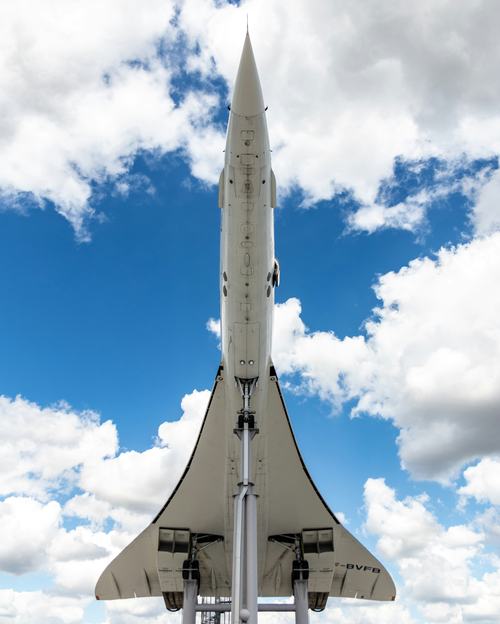
In the early 70s my Dad took me to a lecture given by some of the people who developed Concorde. In the Q&A session someone asked what came after Concorde. The answer was of a world where speed would increase and everywhere the world would be 4 hours away. Twice in the last year I’ve spent 4 hours waiting in an airport.
Both talks inspired me and felt real at the time, but nowadays airline travel is far slower than the records Concorde a half century ago. and energy is hardly cost free!
So, with AI moving to widespread adoption globally, the next expectations are for AGI (Artificial General Intelligence) and ASI (Artificial Super Intelligence). The current flurry of IPOs and economic activity make it seem so near, just like my youthful examples. In the words of the song “It ain’t necessarily so”.
The gurus of AI are convinced that the “Singularity” is with us now or in he next few years. The Singularity, to me, is the Geek equivalent of the Rapture.
The assumption of a nice linear progression is what forecasters like, but it misses the nuance that can be vitally important.
There is much debate, especially in the American midterms, over Data Centres and in particular the power and water requirements. In 2024 UK Data Centres consumed 4.5TWh. The expected figures for the 2030s are multiples of that. Yet the human brain functions on around 25W. The UK population currently uses less brain energy than datacentres need. What would be the power consumption of an AGI or an ASI?
Back in the 1940s, an American Scientist, Vannevar Bush developed the memex, a technology that in retrospect looks very much like like Hypertext, the key technology of the World Wide Web. Hypertext as a term was coined by Ted Nelson in the early 1960s. So why did it take so long to mature into a technology we all use daily now? There were many steps on the way and some important manifestations of the potential.
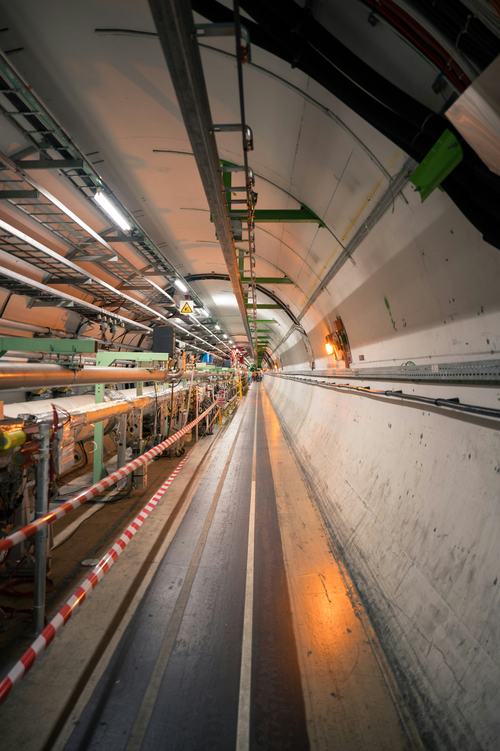
When it came to the world’s attention, it came from CERN in Switzerland, a physics centre, not a Computer Lab and not from a company. The challenge that Tim Berners Lee addressed, was that the amount of information required to do the Physics was enormous, but fragmented and in different formats. One of the myths in innovation is that suppliers innovate and sell to customers. There is a long history of users as innovators, having to solve their own problems, whilst suppliers capitalise on the breakthrough and push it into general circulation.
In the early 1990s a Director of a Bank asked me to suggest some places where technology was being developed that would impact on Banking by the year 2000. If I had suggested CERN, would that have seemed credible at the time, or completely left field? It would have been right.
So, for me AGI and ASI are not just around the corner. I think they may well happen, but not soon. I also suggest that we may be looking in the wrong places.
Firstly, where is the research being done to reduce power requirements towards the levels of the human brain? Reducing the power requirements by 99% would be a good start. If that happened I think the timescale for AGI and ASI might well be shortened considerably.
Secondly, I do think that the terms AGI and ASI are very woolly and vague. In particular, the notion of “Intelligence” in computing does not map well onto current theories of intelligence coming out of brain science. I find arguments over current AI being conscious frankly laughable.
Finally, just because someone is an expert in the technology does not always give them insight into it’s societal and economic impact, or timescales.
In 2013, Elon Musk claimed that 90% of miles would be autonomous by 2016.
In 2016, Geoffrey Hinton, a real expert in AI, claimed that AI would replace radiologists very shortly.
Today we have a shortage of radiologists and they still drive themselves to work.
Many, if not most, technologies follow an S-Curve in development. There is initially a long near horizontal phase. Then there is a period of rapid vertical development and finally a slowing and a new horizontal phase, the limits of the technology. Technologies are defined as much by their limits as by their capabilities. When people say that a technology has no limits, beware.
For me, the current AI trajectory will not lead to AGI or ASI. Those may well be different S-Curves.
It is beyond the scope of this post, but I think that ASI will happen before AGI.
Yet, the WWW is an interesting example. An idea can be in existence for a long time without really achieving it’s potential. Yet, if someone has a big enough problem that needs the idea to come to fruition, it can be deployed rapidly once proven.
“Nothing is more powerful than an idea whose time has come”. (Gustave Aimard in his 1861 novel “Les Francs-Tireurs”)
So, where would you look? Where might you invest to create the next wave of innovations?
Have a fun 2027.