Why Systemic Stability Is Becoming A Greater Draw Than Incentives in Global Capital Markets
Monday, 21 September 2026By Christopher Gleadle

The world of cross‑border investment has always depended on a certain rhythm: an assumption that the underlying systems enabling economic activity would behave within familiar bounds. Investors could model risk using historical data, price volatility with reasonable confidence, and treat shocks as episodic disturbances rather than structural features of the landscape. That rhythm has broken. What we now call the polycrisis is not a single phenomenon but a convergence: climate instability, geopolitical fragmentation, demographic imbalance, resource stress, and technological acceleration interacting in ways that make yesterday’s risk models feel like maps of coastlines that no longer exist.
In this environment, investors resemble households trying to build a future in a town where the weather has become unpredictable and the utilities unreliable. The question is no longer whether the neighbourhood looks attractive on paper, but whether the foundations can withstand the pressures that are now routine. Incentives, tax regimes, and regulatory efficiency still matter, but they no longer determine the Investability of a location. They are surface features. The deeper determinant is whether a jurisdiction can stabilise the physical systems that make industrial life possible.
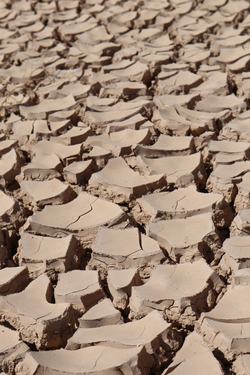
Energy and water sit at the centre of this shift. They are not simply inputs; they are the enabling conditions of modern production. Energy is the universal workhorse powering manufacturing, compute, logistics, transport, and materials processing. Water is the indispensable solvent, coolant, and life‑support mechanism behind agriculture, thermal generation, semiconductor fabrication, and urban growth. Their interdependence is structural: energy requires water; water requires energy. When one system falters, the other follows, and the consequences cascade through supply chains, balance sheets, and national competitiveness.
This is where the metaphor of household infrastructure becomes more than illustrative. A country that treats energy and water as separate domains, managed by different ministries, financed through different instruments, regulated through different pathways, resembles a home with mismatched wiring and plumbing. Each system may function in isolation, but under stress they amplify each other’s weaknesses. A drought becomes a power shortage; a power shortage becomes a factory slowdown; a slowdown becomes an export disruption. Investors experience these failures not as abstract policy issues but as interruptions to cash flow.

The jurisdictions that will thrive in this new environment are those that recognise the need for integrated, system‑stabilising assets. When energy and water are planned, financed, and governed as a single infrastructure ecosystem, they behave more like a reinforced foundation absorbing shocks rather than transmitting them. This is not a theoretical proposition; it is already visible in emerging models of clustered energy‑water hubs. By co‑locating power generation and water production, these hubs create localised resilience1: firm zero‑carbon baseload power and high‑volume fresh water delivered directly at the point of industrial use. For investors, this reduces exposure to grid instability, lowers operational risk for heavy off‑takers, accelerates permitting through modular design, and eases fiscal pressure through multi‑revenue infrastructure models.
The broader implication is that investment strategy is undergoing a quiet but profound reorientation. The traditional two‑dimensional framing of risk and return is giving way to a three‑dimensional calculus2: risk, return, and real‑world impact. The question is no longer whether a jurisdiction is cost‑competitive, but whether it is resilience‑competitive. Does it strengthen or weaken the systems that underpin economic activity? Does it reduce fragility or merely shift it? Does it build assets that stabilise the operating environment or rely on inducements that cannot compensate for systemic vulnerability?
This shift aligns with a deeper governance transformation. Countries that adopt an IOOI model evaluating how external biophysical constraints shape national competitiveness (Outside‑In) and how infrastructure investment alters real‑world stability (Inside‑Out), position themselves to attract long‑duration capital, advanced manufacturing, data‑intensive industries, and strategic industrial clusters. They move from being recipients of investment to stewards of system resilience.
The most surprising insight, and perhaps the most important, is that the contest for investment is no longer a competition of incentives. It is a competition of stability. In a polycrisis world, the jurisdictions that build assets capable of stabilising their own operating environment will secure the capital, industries, and economic durability of the future. Those that continue to optimise inducements in the financial world while neglecting fragility in the real world will find themselves offering attractive terms for investments that cannot be delivered reliably.
This is the new narrative of Investability: not a race to the bottom on cost, but a race to the top on resilience.
2 The Sphere Economy, Gleadle, C, 2026. Chapter The Edge of Chaos, University of Buckingham Press